Mobile Money and WhatsApp Scams: 8 Warning Signs and What to Do
Scammers use mobile money and WhatsApp because they are fast and personal. Learn the eight warning signs, the rules that keep your money safe, and what to do if you are targeted.

· 5 min read
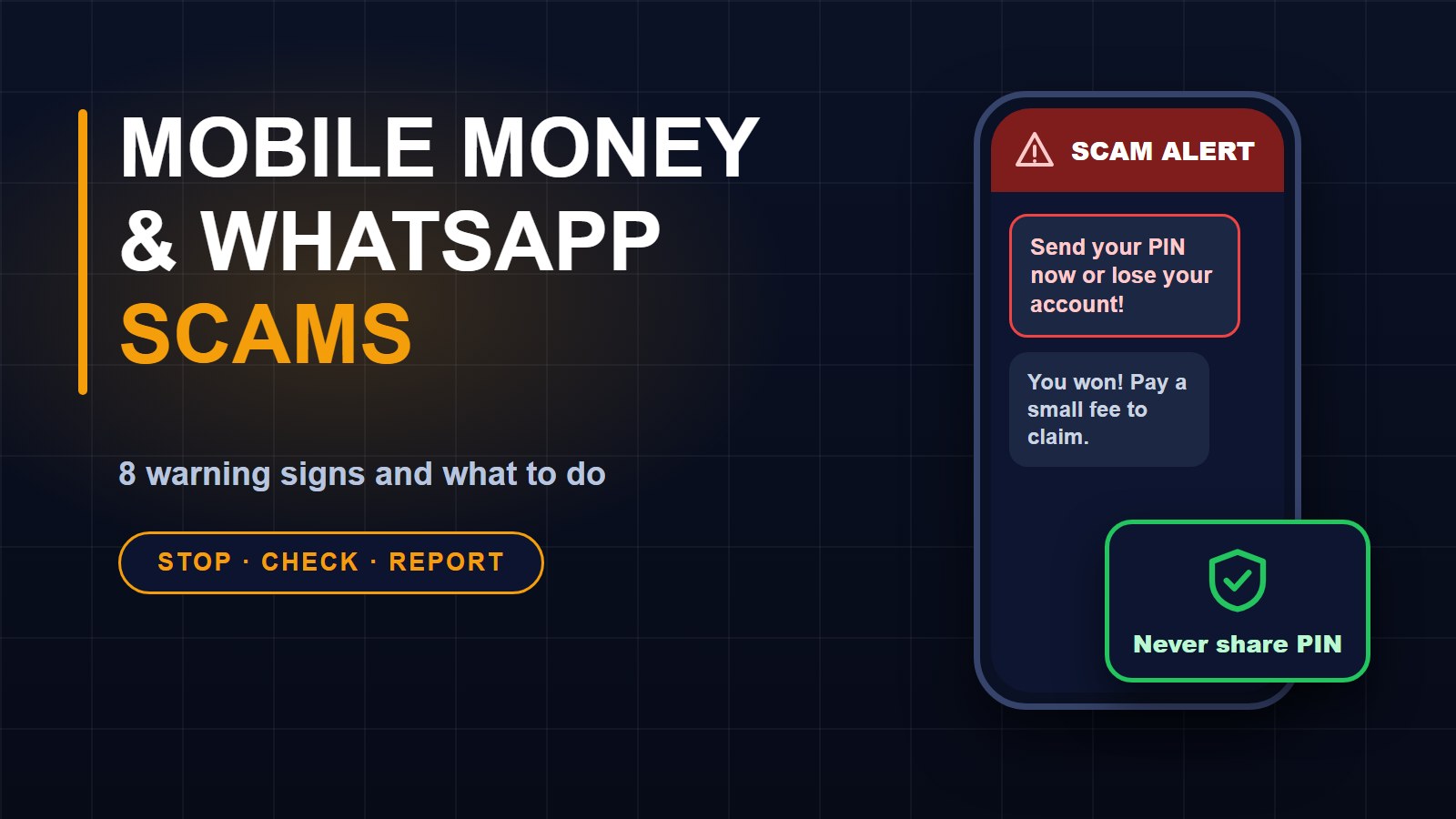
Mobile money and WhatsApp have made it easier to pay, sell and stay in touch. They have also made it easier for scammers, who only need a phone and a convincing story. The good news is that most scams follow the same few patterns, and once you know them, they are easy to spot.
This guide is general advice and does not replace the rules of your mobile money provider or bank. Always use the official numbers and apps of your own provider.
Warning sign 1: pressure and urgency
"Do it now or you lose your account." "The offer ends in ten minutes." Scammers want you to act before you think. Real companies give you time. If someone is rushing you, stop. Take a breath and check.
Warning sign 2: someone asks for your PIN or code
No genuine agent, bank, shop or mobile money company will ask for your PIN, password or the one-time code sent to your phone. If someone does, it is a scam. Never read a code aloud or send it by message, even to a person who sounds friendly or official.
Warning sign 3: "I sent you money by mistake"
A message arrives saying money was sent to you by mistake, and asking you to send it back. Check your balance in your own mobile money menu or app, not in a text message that anyone could have written. A fake confirmation is easy to create. If no money is there, there is nothing to return. If money really was sent, ask your provider how to return it properly.
Warning sign 4: prizes you never entered
"You won a phone." "You have been picked for a cash prize." If you did not enter, you did not win. And if you must pay a fee, a tax or a delivery charge first, it is a scam. A real prize does not ask you to pay to receive it.
Warning sign 5: jobs and loans that ask for money first
Fake employers and lenders ask you to pay a registration, training or processing fee before you start or before the money is released. Genuine employers do not charge you to hire you. Be careful of any loan offer that asks for money upfront; our guide to how loan interest and repayments work explains what to check.
Warning sign 6: a friend or relative on a "new number"
"Hi, it's me, I changed my number. Can you send me some money? I will pay you back." The person is not who they say. Before you send anything, call the old number, or ask a question only the real person could answer. Call them on a voice call, not just a message.
Warning sign 7: links that ask you to log in
A message with a link that says your account is blocked, or that you must confirm your details. The link goes to a fake page that steals what you type. Do not tap it. Open the official app or website yourself instead.
Warning sign 8: deals that are too good
A brand new phone at half the price, from a seller who wants payment first and will not meet you. A "business opportunity" that doubles your money in a week. If it sounds too good to be true, it nearly always is.
Simple rules that keep you safe
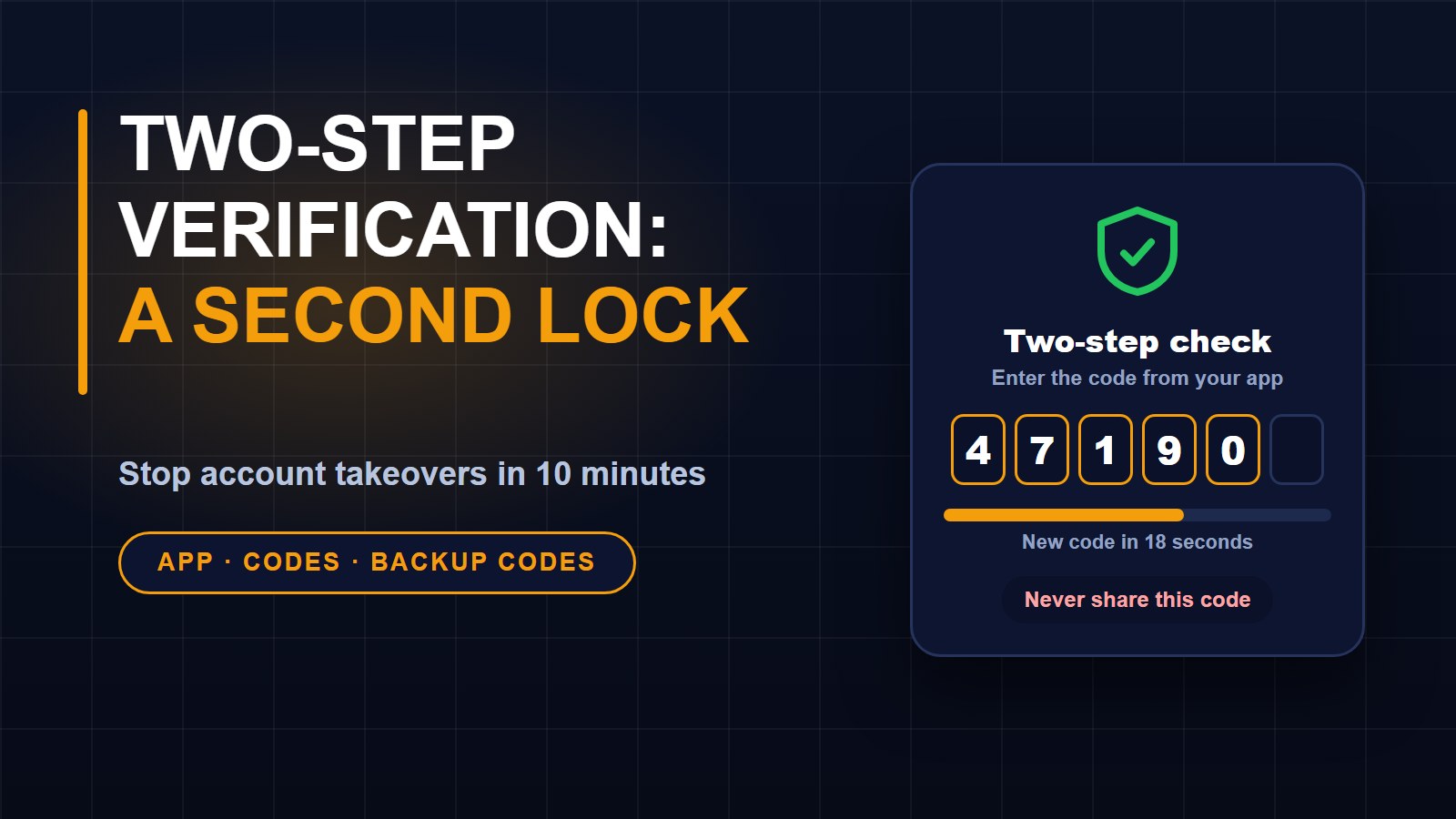
Never share your PIN, password or codes. Check your balance only in your own app or menu. Verify new numbers by calling the person. Read the name shown before you confirm a payment, and make sure it matches the person you meant to pay. Use a different password for each account, and turn on two-step verification on WhatsApp. If you need help choosing a strong password, try the password strength checker. It runs on your device and does not send what you type anywhere.
If you sell online
Do not release goods until you have confirmed the money in your own account. Keep records of each sale, as explained in our guide to accepting mobile money payments in your business. A clear WhatsApp business link also helps customers know they are talking to the real you; the WhatsApp link maker can create one.
What to do if you have been scammed
Act quickly. Contact your mobile money provider or bank by its official number and tell them exactly what happened; the sooner you report, the better the chance of help. Change your PIN and passwords. Keep screenshots of the messages and the number that contacted you. Report it to the police if money was lost. Warn your friends and family so they do not fall for the same trick.
Share what you know
Scammers rely on people feeling embarrassed and staying silent. Talk about it. Teach your parents, your customers and your staff the eight signs above. A few minutes of awareness protects a whole community. You can find more free tools on the tools page.
About the author
Francis Landford
Software Engineer | Creative Problem Solver | Innovative Software Solutions & Modern Applications
More about Francis Landford →

Discussion (0)
Sign in or create a free account to join the conversation.
No comments yet. Start the conversation.