How Long Does It Take to Build a Website? A Realistic Timeline
The honest answer is it depends, but there is a pattern. Here are the five phases of a website project, what makes each one longer or shorter, and how you can keep the project moving.

· 5 min read
You have decided to get a website. You ask a developer how long it will take, and the answer is: it depends.
That is true, and also frustrating. You may have an event, a launch or a deadline, and you need to know what to expect.
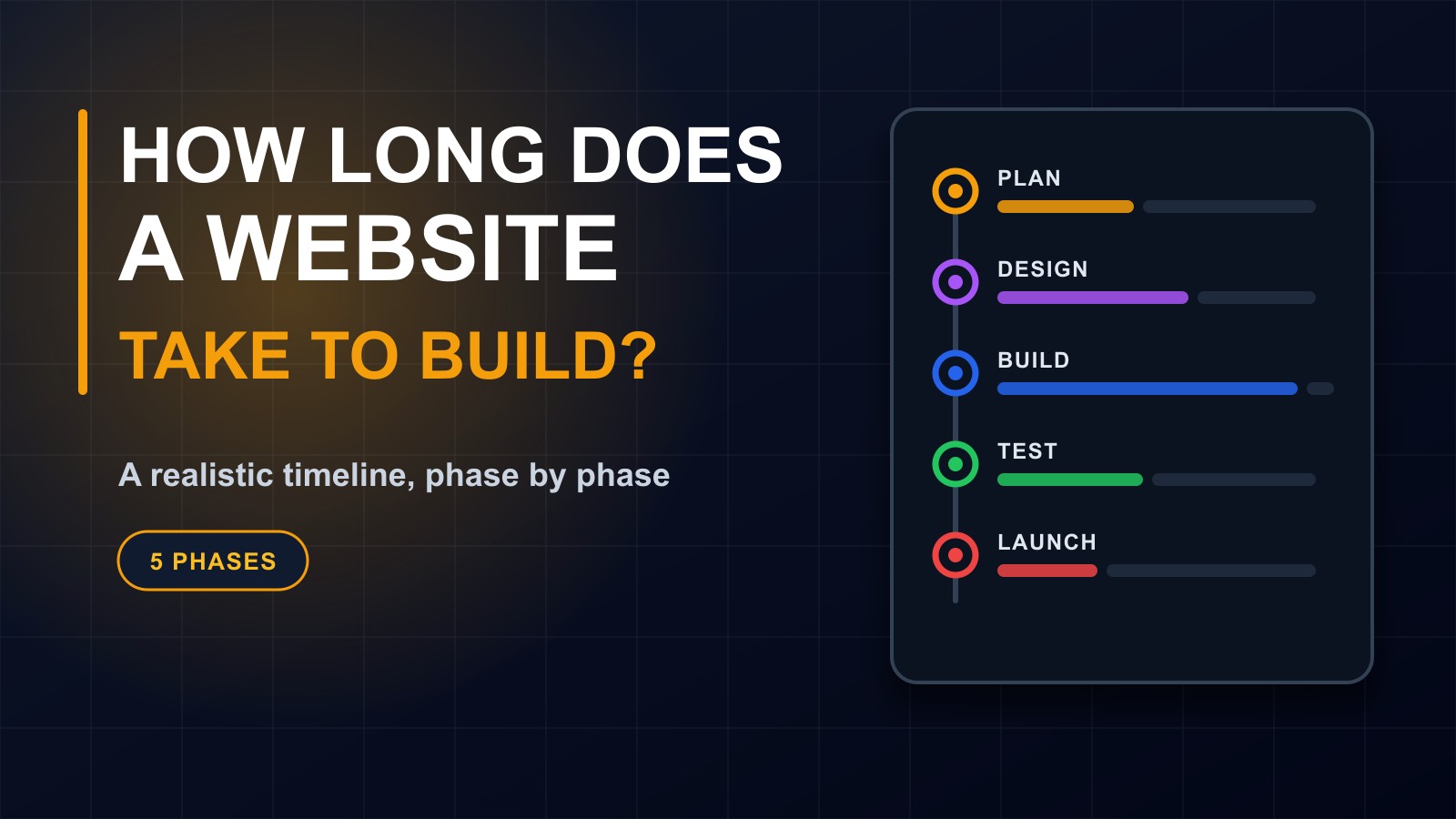
This post gives a realistic picture. It will not promise a single number, because a one-page site and a custom school system are completely different jobs. What it does is explain the five phases of a project, what makes each one longer or shorter, and how you can keep things moving.
What decides the timeline
Four things matter most.
Size and complexity. A small information site is quick. An online shop with payments, a booking system or a platform with logins and different user roles takes much longer.
Content. Writing, photographs and logos have to exist before they can be placed. Waiting for content is the most common cause of delay.
Decisions and feedback. Projects stall when nobody answers questions or approves designs.
Changes in scope. Adding new features halfway through resets part of the work.
Phase 1: Planning
This is where the project is defined. You and the developer discuss your goals, your visitors, the pages and features you need and the budget. The result should be a written plan: what will be delivered, what will not, the timeline and the price.
It can feel like nothing is happening, yet this phase saves the most time. A clear plan prevents rework later.
What speeds it up: knowing your goals, gathering examples of sites you like and deciding who has the final say.
Phase 2: Design
The developer or designer shows how the site will look, usually starting with the home page and the main layouts for phones and computers. You give feedback, and the design is refined.
What speeds it up: giving specific, collected feedback at once, instead of scattered comments over several weeks. Having your logo, colours and photos ready.
What slows it down: many rounds of major changes, several decision makers who disagree and no clear brand.
Phase 3: Build
Now the design becomes a working website. The structure is built, pages and features are created, the admin area is set up, and the site is made fast, secure and friendly to search engines.
This is usually the longest phase for larger projects. The more custom features you need, such as accounts, payments, bookings or dashboards, the more time it takes.
What speeds it up: a stable plan, early delivery of content and prompt answers to questions.
Phase 4: Content and testing
Your text, photos and documents are added, and everything is tested: on different phones and browsers, with slow connections, with every form and button. Security, speed and search settings are checked.
Testing is not optional. Bugs found now cost minutes to fix. Bugs found after launch cost trust.
What speeds it up: having final content ready, and testing together with the developer instead of waiting until the end.
Phase 5: Launch and handover
The site goes live on your domain. You receive your logins, files and backup information, get a short training session and agree how support works. After launch, the work is not finished: watch for problems, check that your site is registered with search engines and start measuring results.
Launch day itself is often quick, once everything has been checked. Rushing it is a mistake.
Typical ranges
As a rough guide, a simple website with a few pages can often be completed in a matter of weeks when content is ready and feedback is quick. A website with custom features or an online shop usually takes longer. A custom system such as a school or business management platform is measured in months, and often built in stages.
Treat these as general patterns, not promises. A good developer will give you a specific estimate after understanding your needs.
What slows projects down most
Late content, such as text and photos that arrive weeks after promised. Slow feedback, where questions sit unanswered. Constant changes to what the site should be. Too many people with opinions and nobody with final authority. And unclear agreements about what is included.
How you can speed things up
Prepare your content early. Choose one person to make decisions for you. Give feedback in batches and be specific. Decide what is essential for the first version and leave nice-to-have features for later. And keep communication quick and friendly.
Start small, then grow
A smart approach is to launch a solid first version and improve it step by step. This gets you online sooner, brings real feedback from real visitors and spreads the cost.
Beware of unrealistic promises
If someone promises a complex site in a couple of days for a tiny price, ask what is being skipped. Security, testing, mobile design and backups are the first things cut to hit an unrealistic deadline, and you will pay for them later.
Plan with me
If you have a deadline, tell me early. I will give you an honest timeline, explain what is realistic and suggest a phased plan if needed. Contact me through the contact page, or call or WhatsApp me on +231 777 810 466. And if you know someone waiting on a website that never seems to finish, share this post with them.
About the author
Francis Landford
Software Engineer | Creative Problem Solver | Innovative Software Solutions & Modern Applications
More about Francis Landford →