How to Handle Customer Complaints Like a Professional
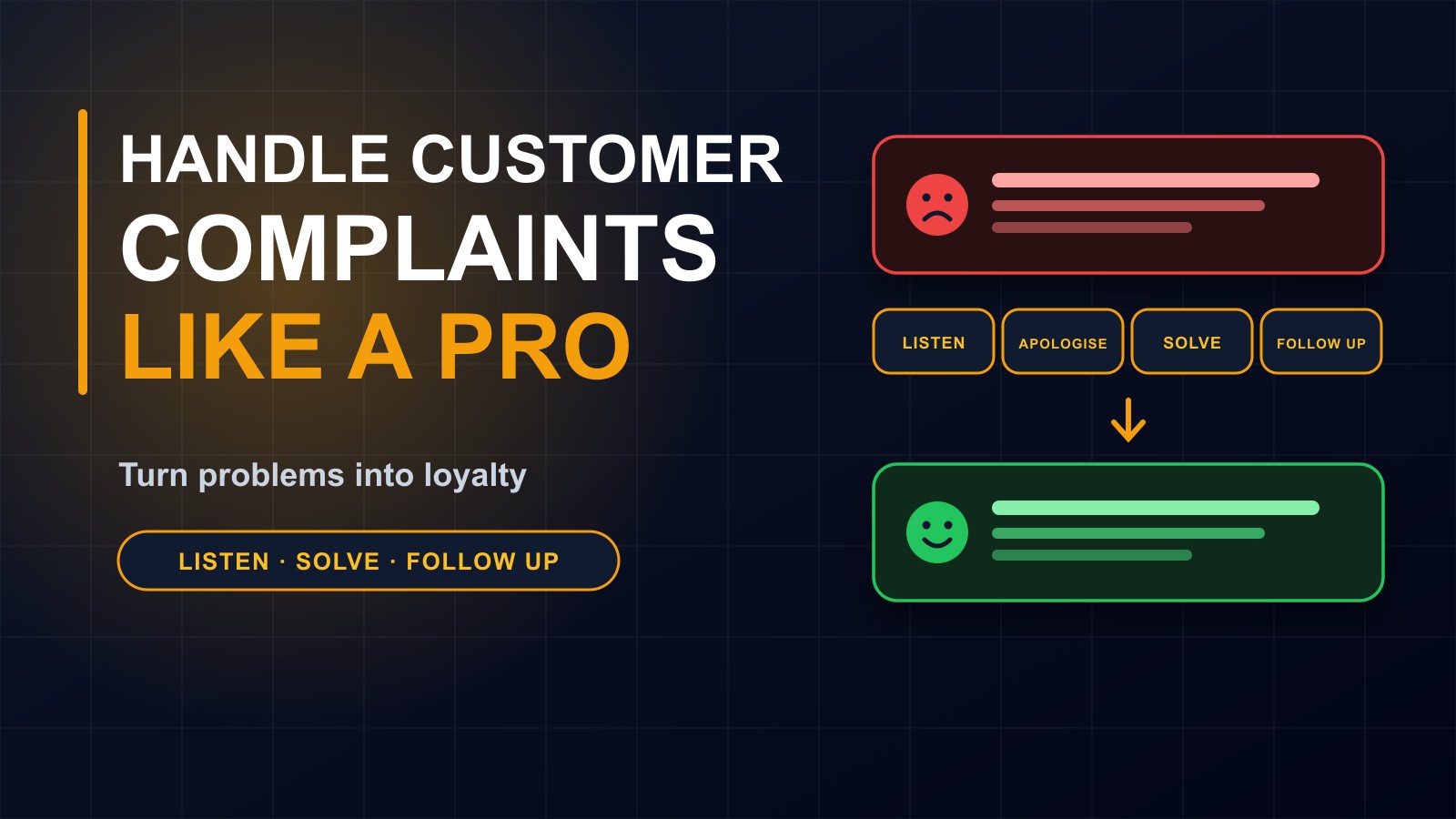
Every business gets complaints. What matters is what happens next. Here is a simple, respectful method to listen, apologise, solve the problem and follow up, so that an unhappy customer becomes a loyal one.

· 6 min read
Nobody enjoys getting a complaint. It can feel unfair, personal or embarrassing, especially when you have worked hard. The natural reactions are to defend yourself, argue or avoid the person.
Yet complaints are one of the most valuable things a customer can give you. Most unhappy customers never say anything. They simply leave and tell their friends. A customer who complains is giving you a chance to put things right, and to learn what is not working.
This post explains a simple, professional method for handling complaints, whether they arrive in person, by phone, on WhatsApp or in a public review.
Why handling complaints well matters
How you respond often matters more than the original problem. Customers understand that mistakes happen. What they remember is whether you listened, took responsibility and fixed it.
A well-handled complaint can create more loyalty than if nothing had gone wrong. A badly handled one can cost you many customers, because people share their experiences.
The method: listen, apologise, solve, follow up
Step 1: Stay calm and listen
Take a breath. Do not interrupt, argue or explain yet. Let the customer say everything they need to say. Listening carefully already lowers the temperature, because many people are angry mostly because they feel ignored.
Show that you are paying attention: look at them, nod, take notes. If the complaint is by message, read it fully before you reply, and do not respond while you are angry. A short pause often produces a far better answer.
Step 2: Repeat what you understood
Briefly say it back in your own words: so the order arrived two days late and one item was missing. Is that right? This confirms that you understood, shows respect and prevents misunderstandings.
Ask questions to get the facts: when did it happen, what exactly went wrong, what was promised, what do you expect now? Keep a respectful, curious tone, not a suspicious one.
Step 3: Apologise sincerely
If something went wrong, say sorry plainly: I am sorry this happened. That must have been frustrating. A real apology costs nothing and means a lot.
Avoid empty or defensive apologies, such as I am sorry you feel that way, or sorry, but it was not our fault. Apologise for the experience, even when the cause was outside your control, and then explain what you will do.
Step 4: Solve the problem or explain honestly
Offer a fair solution as quickly as you can: replace the item, correct the mistake, refund, repair, redo the work or give a discount, whichever fits the situation. If you need time to investigate, say exactly how long and when you will get back to them.
Give the customer a choice where possible: would you prefer a replacement or a refund? People feel respected when they have a say.
If the complaint is unfair or mistaken, stay polite. Explain calmly what happened, show evidence if you have it and offer what you reasonably can. You do not have to agree to everything, but you do have to treat people with respect.
Step 5: Do what you promised
Keep every commitment. If you said you would call back by Friday, call on Friday. A solution that arrives late can undo all your good work.
Step 6: Follow up
A day or a few days later, check that everything is now fine. A short message such as we wanted to make sure the replacement arrived and everything is working shows that you care. This step is often skipped, and it is the one customers remember.
Step 7: Learn from it
Write down what happened, why, and what you will change. Is it a one-time mistake or a pattern? A process that needs fixing? A staff member who needs help? A product that keeps disappointing? Complaints are free advice, as long as you act on them.
Handling complaints in writing and on WhatsApp
Respond quickly, within hours where possible. Begin with the customer's name and a thank-you for telling you. Keep your message short, calm and clear, and avoid capital letters, sarcasm and blame. Move to a call if the matter is complicated, because tone is easier to control in a conversation.
Handling public reviews
When the complaint is posted publicly, remember that you are answering for the next customer who reads it as well.
Reply politely and promptly. Thank them for the feedback. Apologise for their experience. Say briefly what you will do, and invite them to contact you directly to resolve it. Never argue, accuse or reveal private details.
If a review is false, abusive or about a different business, you can report it to the platform. Do not reply with anger, and never offer rewards in exchange for removing or changing a review.
Make it easy for customers to complain to you
Many unhappy customers go online because they cannot find an easy way to reach you. Display a phone number, WhatsApp number and email address prominently, say who will respond and how quickly, and give staff the confidence to solve small problems on the spot.
Simple policies help
Write down a short set of rules for your team: who can approve refunds or replacements, up to what value, how quickly to respond, how to record complaints and when to escalate to a manager. When people know their limits, they can act quickly and fairly.
Train your team
Practise a few examples together. What would you say to a customer whose order is late? To someone who was charged twice? Role-playing builds calm, confidence and kindness. Remind everyone that the goal is to solve the problem, not to win the argument.
Common mistakes
Arguing or defending yourself. Blaming the customer, a colleague or a supplier. Making excuses. Ignoring messages in the hope that they will go away. Promising something you cannot deliver. Responding when angry. Forgetting to follow up. And never changing anything afterwards.
When a customer is abusive
You can be respectful and still set limits. If someone becomes threatening or abusive, calmly say that you want to help, but you cannot continue in this way, and offer to continue when things have calmed down. Protect your staff, and involve a manager or, where necessary, the authorities.
Keep records
Note the date, the customer, what happened, what you did and the outcome. Records help you spot patterns, answer disputes and improve.
A short checklist
Stay calm. Listen fully. Repeat the problem. Apologise sincerely. Offer a fair solution. Do what you promised. Follow up. Learn and improve.
Build a business people trust
I help businesses create clear contact options, customer-friendly websites and simple systems for recording and following up enquiries and complaints. Contact me through the contact page, or call or WhatsApp me on +231 777 810 466. And if you know a business owner who dreads bad reviews, share this post with them.
About the author
Francis Landford
Software Engineer | Creative Problem Solver | Innovative Software Solutions & Modern Applications
More about Francis Landford →