How to Choose a Domain Name: 7 Tips and Common Mistakes
Your domain name is your address on the internet and it appears on everything from your website to your email. Here are seven simple tips for choosing one that is easy to remember, trustworthy and truly yours.

· 5 min read
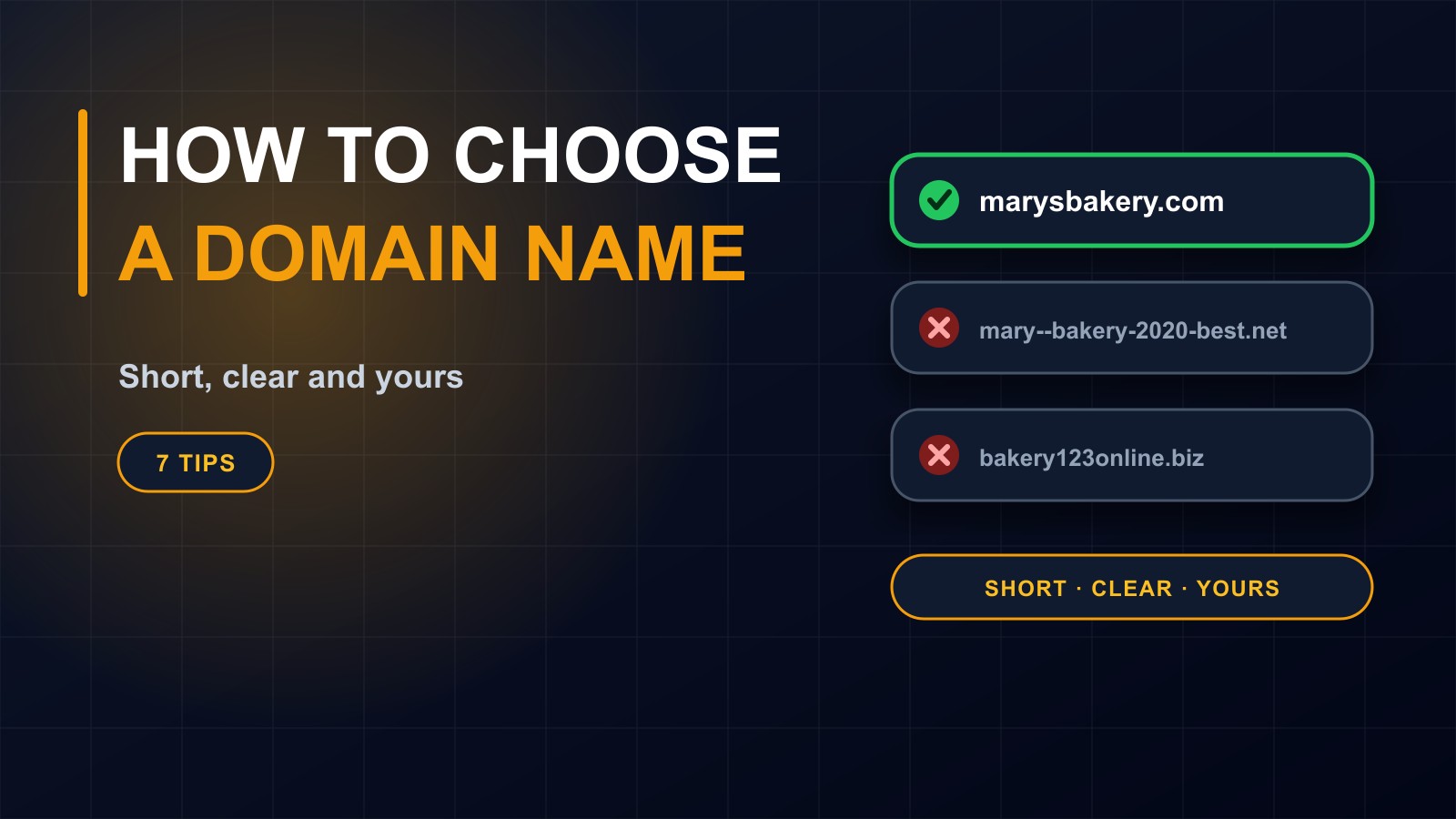
Your domain name is your address on the internet. It appears in your web address, in your email addresses, on your business cards, on your vehicle, on your social media pages and in everything you print. People will type it from memory, hear it said aloud and read it on a phone.
It is also surprisingly hard to change later, because customers, search engines and links all know it. That makes it worth a little time now.
This post gives seven practical tips for choosing a good domain name, and the mistakes to avoid.
Tip 1: Keep it short and clear
Shorter names are easier to remember, type and say. Aim for a name that people can hear once and write down correctly. If you need to repeat it three times on the phone, it is too complicated.
Tip 2: Make it easy to spell
If your business name has an unusual spelling, many customers will type it wrongly and end up elsewhere. Avoid clever misspellings, such as swapping letters for numbers, unless you are prepared to explain them every time.
Test it: say the name to a few people and ask them to write it down.
Tip 3: Avoid hyphens and numbers
Hyphens make addresses harder to say, easy to forget and look less professional. Numbers cause confusion too: is it two, to or 2? Some of the best names have neither.
An exception is a number that is genuinely part of your brand, in which case you may wish to register both versions.
Tip 4: Choose the right ending
The ending after the dot is called an extension. The most familiar one, .com, is trusted worldwide and a good choice for businesses with international customers. Many countries also have their own, such as .lr for Liberia, which can suit local businesses and show where you operate. Availability and registration rules vary, and some endings have conditions.
Pick the ending your customers will naturally expect. If you can, avoid obscure endings that people might mistrust, and consider also registering the version people are most likely to type by mistake.
Tip 5: Match your brand and say what you do
The best domain name matches the name people already know you by. If your business is Mary's Bakery, marysbakery is more natural than something about bread for everyone.
If your preferred name is taken, add a clear word such as your city or your field, rather than strange spellings. Think about growth too: a name tied to a single product or location may feel limiting later.
Tip 6: Check for conflicts
Before you commit, search for the name on Google and on social media. Make sure it is not too close to another business or a well-known brand, which can cause confusion and even legal trouble. If possible, choose a name for which you can also get matching social media usernames.
Say the whole name aloud and read it without spaces, to check that it does not accidentally spell something embarrassing.
Tip 7: Register it in your own name
This is the most important tip. The domain should be registered in your name or your organization's name, with your email address as the contact, and a login that you control. If a developer or friend registers it for you in their own account, you do not truly own it, and you may lose your website and email if they disappear.
Keep your registration details accurate. Use an email address that you will always be able to access.
After you choose
Turn on automatic renewal and make sure the payment method stays valid. An expired domain can be lost, and then your website and email stop working. Many owners also register for a few years at a time. Set reminders anyway.
Consider privacy protection for your registration details, which many registrars offer, so your personal information is not displayed publicly.
Set up email on your domain, such as name@yourbusiness.com, because it builds trust. Protect the registrar account with a strong password and two-step login, since someone who gains access could transfer your domain away.
Common mistakes
Choosing a long, complicated name. Using hyphens, numbers and unusual spellings. Picking a name tied to a trend that will date. Letting someone else register it for you. Forgetting to renew. Using a free address for business email. Ignoring trademarks and similar brands. And buying lots of extra names that you never use.
What about buying a name that someone else owns?
Sometimes the perfect name is already registered. You may be able to contact the owner, but be careful: prices can be unreasonable, and scams are common. Often a slightly different name, or a different ending, is a better use of your money.
Let us choose it together
If you are starting a business or a website and want a second opinion, I am happy to help you check names, register the domain properly in your name and set up email and hosting. Contact me through the contact page, or call or WhatsApp me on +231 777 810 466. And if you know someone about to register a domain, share this post with them first.
About the author
Francis Landford
Software Engineer | Creative Problem Solver | Innovative Software Solutions & Modern Applications
More about Francis Landford →